The Sacrificial Pancake: What Building a Reading App for Kids Is Teaching Me
Twenty years ago, I turned down a job because I wanted to build. Today I’m building a reading app for kids, and it’s teaching me the same lesson my son learned flipping pancakes.
I recently heard that newsletters are dead! Well, I’m still writing mine, to share my journey and connect 😉
And speaking of dead things, last weekend was Halloween in the US.
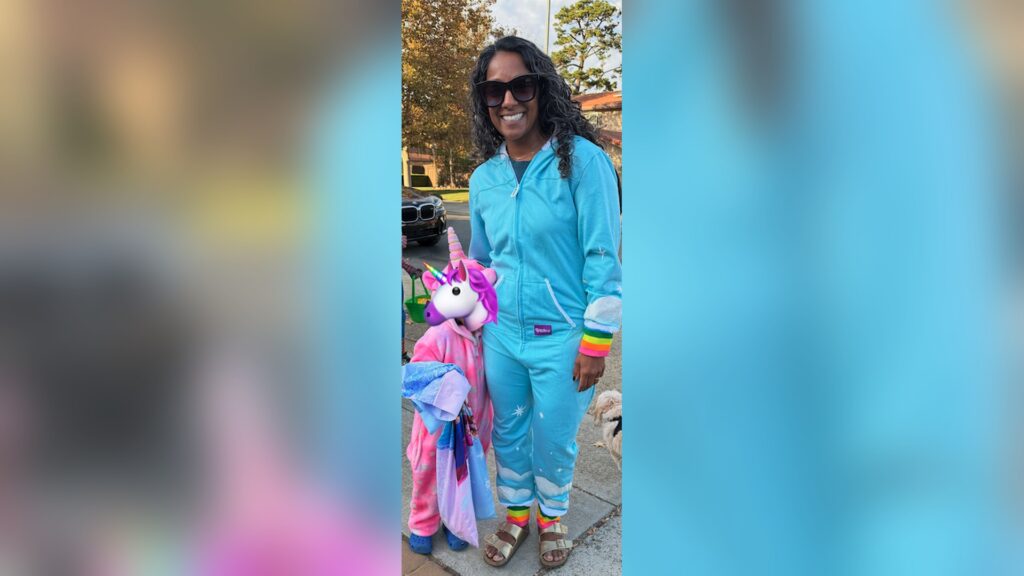
We went trick-or-treating in our neighborhood, which happens to be one of THE Halloween neighborhoods in our town! Evani and I dressed up as unicorns. My oldest, Nayakan, went as a crusader, and my middle kid, Kaveh, went as the Grinch.
On Sunday morning, Kaveh wanted to make pancakes, and he had a hard time flipping the first couple. I told him that’s normal. It’s called “first pancake syndrome.” Some people even call it “the sacrificial pancake” or “the dog’s pancake.” The point is, the first one is where you get a feel for the pan and the batter. So I told him to keep going and keep practicing his flip.
After all, the goal of Sunday morning pancakes is to make them and share them with friends and family.
Those have always been my primary goals in life, too: making and building things, and sharing them with others to connect. And of course, there have been times when those goals have been challenged.
Why I turned down Microsoft in 2004
When I was graduating from college, I made it to the final round of interviews at Microsoft. Afterward, the recruiter told me they thought I’d be a better fit as an SDET (a software testing role) than as a software engineer.
I could have just taken the role. But I read between the lines. Back then, SDETs focused on testing; they didn’t get to build the applications. (Today the lines have blurred, and SDETs are expected to be much more technical.)
So I thanked the recruiter and turned it down. I did that even though I was graduating in 2004 with a mountain of college debt to pay back. What was I thinking?!
My greatest fear at the time was being pigeon-holed. I’d learned from my dad, who’d had a 20+ year career in tech, what to watch out for.
So the summer after graduation, I took an internship at Qualcomm in RTP. Then I held out for a role that would let me build and grow.
It worked out. The first role I landed did pay better. The growth, though—that had to come from within.
As the noob on the team, I didn’t get handed exciting projects, or even get to propose them. There was a lot of ramp-up and little to no documentation. So I’d surf the internet while I waited for someone to bring me up to speed.
By my second year, I was bored. I negotiated with my manager to take Stanford distance-learning courses over my lunch hour. That kept my skills sharp, and I worked toward a Master’s.
Back then, I could carve out an hour a day to grow. Today, that hour is a lot harder to find.
My greatest fear at the time was being pigeon-holed.
Same market, two decades later
What’s funny is that more than two decades later, we’re in the same market. Talented folks are getting slotted into roles with unclear growth potential. And we’re stretched in so many directions at home and at work that we rarely have time for the growth work.
As a result, there’s a growing divide. On one side are the AI-pilled folks who are building and growing products. On the other is everyone else, trying to figure out which skill to invest in.
A couple of years ago, when I felt like I’d fallen behind, I uncovered the dirty secret. Today’s early adopters had either:
- Negotiated for fewer projects so they could dig into new technology—which probably meant they had more supportive managers, or were great at advocating for themselves.
- Had fewer demands at home and work, so they could carve out time to learn.
- Been forced to learn on the job early, because their companies were investing heavily in the space.
- Or, like me—left, and spent 6 to 12 months coming up to speed.
Every one of these called for acceptance and letting go: letting go of the old role, and accepting that change is inevitable. That doesn’t mean we stop fighting for better pay and better working cultures.
But I’ve learned it’s hard to fight alone.
If I’m the one who’s different in a culture, I need to find a new one where I’m accepted—or forge my own.
Why can’t things stay the same?
Do I wish the rate of change would slow down? Absolutely. But my kids are growing up faster than I’d like. I’m aging, and so are my parents. Whether I like it or not, I have to get comfortable with change, in life and in work.
And yes, I’m very fortunate to have the resources to take a beat. But not forever.
So I’m learning to manage how I spend my time and where I put my energy. Who I choose to work for and with. My own priorities, starting with my health, physical and mental. And, most importantly, knowing when a situation isn’t right for me and moving on—even if that means quitting.
I hear from a lot of folks who are white-knuckling their careers, unsure of next steps, hoping to turn a corner. But what if it’s more of the same? What if white-knuckling it is what’s holding you back?
There will be challenges out there. So what are you scared of? I’ve written mine down:
- Finding partners and building a supportive network I can nurture and count on for the long haul
- Having enough money in the bank to bounce back from setbacks
Writing them down doesn’t make them go away. But it turns them into something I can plan for.
A new direction: building a reading app for kids
More than two decades ago, I turned down a job because I wanted to build. Recently I shared that I’m building something to help kids in grades K–2 read [internal link: last week’s post, “Know the Risks. Run the Experiment. Let Go.”]. It starts with a reading app, and there’s a hardware piece I’m working on that I’ll share once it’s a little more baked.
To some, this might seem boring, or a crowded space. As one investor told me bluntly this week: “It’s nice that you’re building something for your family. But it’s probably not going to become a big business.”
Over the years, I’ve learned it’s an investor’s job to say no to hundreds, even thousands, of entrepreneurs like me. As the founder, it’s my job to figure out how to turn my product into a business.
Early prototype of a reading app for kids in grades K–2 [optional: add a prototype screenshot; upload to WP media library]
Where today’s reading apps for kids fall short
What investors often don’t see is how today’s reading apps fall short. Many of the ones I’ve tried miss in three ways:
- They aren’t self-directed. Yes, it’s important for parents to sit with their kids and work through an exercise or two, especially when they’re young. But what happens when the parent is tired after a long day of work? Teachers know where each child is. However, they have to keep moving with the majority of a class of 20+ kids. So how does the child who needs a little extra practice get individualized attention?
- They don’t really gauge where a child is, or how far they’ve grown. Sometimes kids hit milestones early and then stall for a while. That doesn’t mean something is wrong. The next level might be more challenging and not come as naturally to them. Or something in the material might be confusing and call for a different approach. But many apps rely on parents to report progress instead of measuring the child’s actual reading level. So it’s hard to know whether the app is working for a specific child—your own. The harder part is spotting early signs that a child is struggling, so parents and teachers know to follow up and try a different approach. I don’t know how far an app can realistically go there. But maybe it can give them some clues.
- They’re passive. A lot of lessons repeat one style of teaching, like a video followed by a quiz. But kids learn by doing and practicing, without feeling like they’re constantly being evaluated. And few programs meet a child where they are and grow with them, from letters, to words, to reading fluently.
And beyond the apps, there’s a bigger problem. According to the 2024 Nation’s Report Card, four in ten U.S. fourth graders can’t read at a basic level, the worst in over 20 years.
I know a single app can’t fix that. But over the coming weeks, I’ll share what I’m learning about why kids fall behind and where today’s solutions miss.
How I’m approaching it
Each week, I build a little, recruit families so their kids can test what I’ve built, and get feedback on what worked and what missed the mark. Rinse and repeat.
There’s still a TON of work ahead: polishing the product so it delights kids and parents, finding product/market fit, and figuring out how to build the business.
Market risk is still a big hurdle, as that investor reminded me. But day to day, the bigger hurdle is focus: acknowledging distractions and picking one or two areas to go deep on. So for the past few weeks, I’ve worked through a handful of product iterations. I’ve run a dozen usability tests, and talked to people who can genuinely help me.
This week, a mom who saw the product for the first time said she liked its simplicity. She could tell how much work it must have taken to get there. She and her kid also told me it needs to be more challenging. I took both as signs to keep going. Honestly, the fact that they sat with me for 45 minutes to try it out was huge, given how stretched everyone’s time is these days!
Technology limits: my sacrificial pancakes
Like Kaveh, I’ve made a few sacrificial pancakes of my own. Playing around with the latest technology through a concrete project has shown me its actual limits, and how it can really be used.
For example, I’d been running a couple of local models on an early prototype. They took up too much memory and were slow to load. Worst of all, they weren’t accurate enough at transcribing children’s voices to make for a worthwhile experience.
I was also iterating quickly on an HTML app, knowing it would eventually hit a wall. It did, at the place where I run most of my usability tests: our local public library. Let’s just say the library’s Wi-Fi doesn’t have the bandwidth to load a local model, or low enough latency to feel responsive to a kindergartner!
So I switched to building a native app. And even after seven years at Apple, I’m discovering a lot about building in its ecosystem from the outside!
Usability testing has its limits too
I’m hitting the ceiling on how many iterations I can put families in my own community through. Plus, with the holidays coming up, it’s been hard to schedule time with them.
So I’ve turned my attention to communities that take longer to build relationships with, like my daughter’s preschool and others in our area. This year’s preschoolers are next year’s kindergartners. Starting those relationships now means I’ll be ready when they are.
If you have a kid in grades K–2 and would like to help test what I’m building, sign up here. I’m also looking for one or two K–2 teachers to review the curriculum and my approach. If you know one, please send them this post.
Your turn
I’m running the experiments, refining the product, and honing my own understanding and thinking.
It’s been a circuitous path. But I keep reminding myself that I majored in engineering and joined tech to build things that improve people’s lives—and no one can take that away from me.
What lights you up, and what are you scared of? Tell me in the comments. And if you’d like posts like this in your inbox each week, subscribe to the Femgineer newsletter.


