By Justin Reyes
At the University of Illinois, Supriya Hobbs was preparing to give a talk to a group of Girl Scouts who were on campus to earn their inventor badge to share how inventors and entrepreneurs go about solving problems. Passionate about empowering girls to pursue science, technology, engineering, and mathematics (STEM) she sought to use her own startup, Miss Possible, to create dolls and apps to make the girls aware of other female role models that have made great breakthroughs in STEM. After learning about Amelia Earhart, Marie Curie, and others, the girls were excited to earn their inventor badge and see the possibility of making similar breakthroughs when they grow up.
Elated at the girls reaction, Supriya began her mission to get young girls interested in STEM.
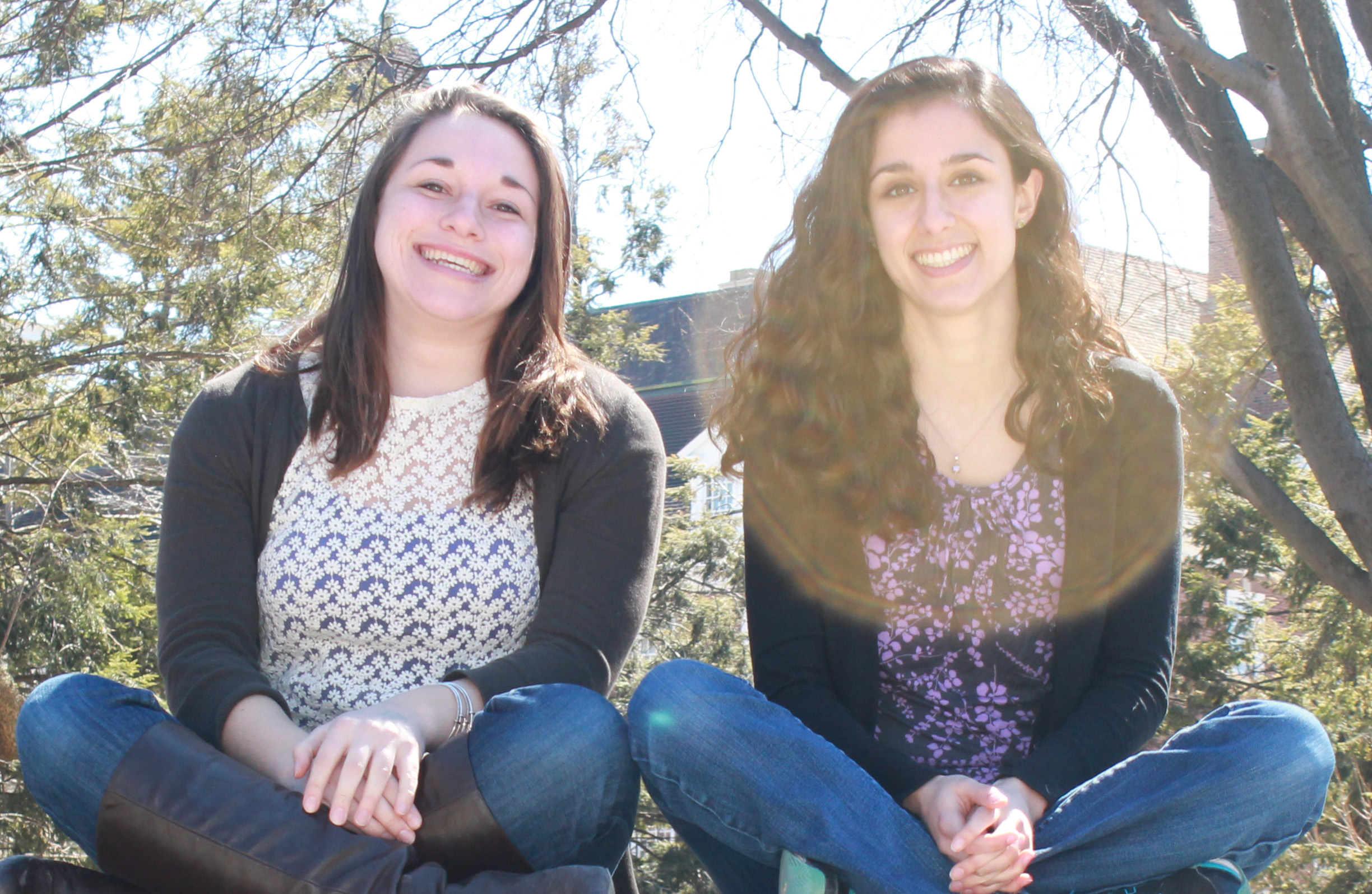
Supriya and her friend, Janna Eaves, came up with the idea to start Miss Possible at the biggest startup competition on campus, the Cozad New Venture Competition. Brainstorming about what they wanted to create together, they reflected on their decision to pursue engineering and also their passion for empowering and inspiring girls to pursue STEM. Looking at their competition and the other dolls and toys out there in the marketplace they discovered that there wasn’t much out there that got them interested in exploring STEM. Barbie, the popular doll, wasn’t doing much to challenge gender roles. After some back and forth, they came to the conclusion that being introduced at an early age was important, and that integrating learning into play was a fun approach to take. Thus, Miss Possible was born.
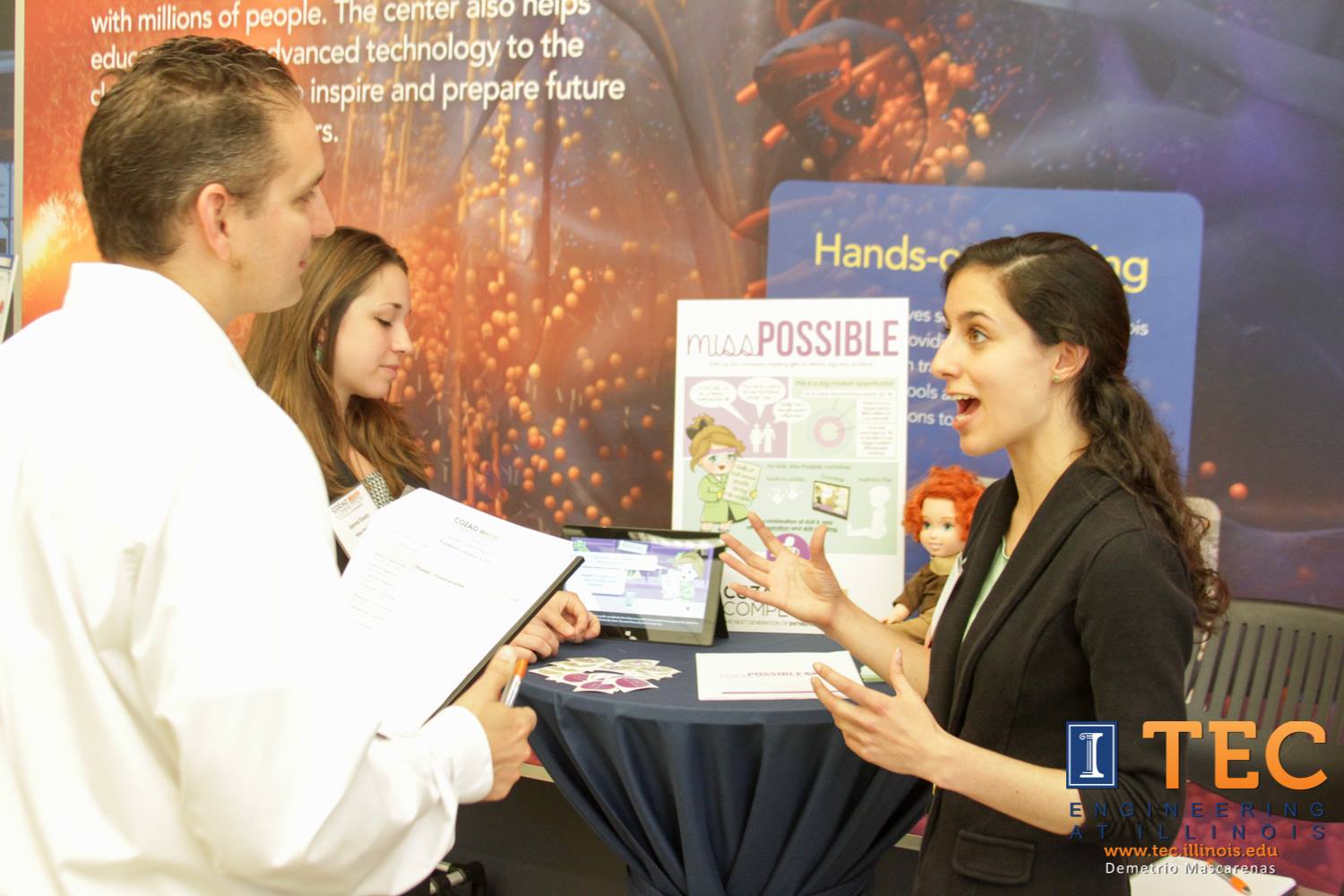
Supriya showed girls a doll of Amelia Earhart. It was only a concept doll, which they created by purchasing an existing oneand cutting it’s hair, then sewing on different clothes. It was a low cost approach to get little girls and parents to understand their idea. After her presentation, she overheard the parents who were ecstatic about her company as a way to get their girls to spend less time staring at a screen and spending time doing more activities. From this insight, Supriya and Janna set off to to create an app along with the doll that would integrate hands-on activities that would teach girls about the different STEM fields.
“That, for us, was a big “aha-moment”! We realized that hands-on activities in our app could teach girls about these fields, and that we could directly apply our previous experiences doing STEM activities with kids to product development.”
With two parents who are chemists, Supriya always knew she would be pursuing something in science or technology. As an engineer, she gets excited about creating things that never existed before and has created many on-going projects throughout her time studying engineering at the University of Illinois. Supriya’s biggest role model growing up was her mother. Just like her, she started in a STEM field then decided to enter the business world. To share this same experience with others, she worked with the Society of Women Engineers to host an mother-daughter engineering workshop. The workshop encompassed hands-on activities and a fun design challenge. Supriya says:
“It has become an annual event now, and has occurred two more times since my initial event. We had a lot of fun planning the event, and it was so cool to see something that had started as an idea in my head become a reality.”
Knowing that not many little girls are fortunate to grow up in a family of engineers or have similar role models was one of her reasons why she was passionate about creating Miss Possible. Newly graduated, Supriya and Janna have dedicated most of their time getting Miss Possible off the ground. While Janna handles product development, Supriya handles business development. She spends most of her time answering emails, meeting with advisors or partners, and speaking with designers to get an update and decides on next steps for upcoming projects. They have already recruited an incredible array of talented designers and developers, who have created and finalized designs for a Marie Curie doll. They are ready to manufacture them!
As full time students they didn’t have any of their own savings to invest so they had to use some of their successes from competitions on campus as funding. Today they are pursuing a different path and launching an Indiegogo campaign this month that will help alleviate some of the pain of getting the initial capital to release their first doll and playset placing a minimum order of 5,000 dolls.
Both Supriya and Janna want to see Miss Possible toys in the hands of girls around the world. They think that both boys and girls can benefit from exposure to strong female role models. When I asked where they hope to see Miss Possible 5 years out they said that they hope they can develop lesson plans for schools that combine stories of role models with engaging activities. They also dream about creating scholarships for girls with plans for improving their communities and even an in-person Miss Possible experience in the form of either a summer camp or a store. As they gear up for their Indiegogo campaign launch and continue raising awareness of Miss Possible and STEM to little girls and parents everywhere, Supriya has one piece of advice for young girls who are pursuing STEM but having a tough time getting through it.
“Focus on the “why.” It’s easy to get caught up in the difficulty of exams, lab reports, and projects, but if you continually remind yourself why you elected to pursue that path and what you hope to do with it, it’s much easier to stay motivated. I wasn’t sure exactly how, but I knew I wanted to make a positive difference in the world. It was that long-term goal that help me stay motivated when school was difficult.”
If you believe in helping encourage more young girls to pursue STEM, then support Supriya’s Indiegogo campaign!


