By Liz Eggleston
You’ve likely heard the hype around coding bootcamps: the sensational $100K salaries and the “zero to sixty” claims. These outcomes are undoubtedly appealing and landing a high-paying job as a developer is certainly possible after graduating from a “bootcamp.” In fact, some coding schools even guarantee a job with a minimum salary or they’ll refund students’ tuition.
From one perspective, these job placement rates are a source of legitimacy for this new industry in education. But developer skills can also serve other purposes: some graduates never intend to search for a new job as a Junior Developer at a startup or dev shop. Instead, they may have an idea for their own revolutionary product, or dreams of being a technical cofounder. This outcome is less advertised (many schools depend on placement fees so don’t encourage students to start their own venture), but has produced stellar products and companies.
Case Study: Making Over Sock Drawers & Building Software Infrastructure
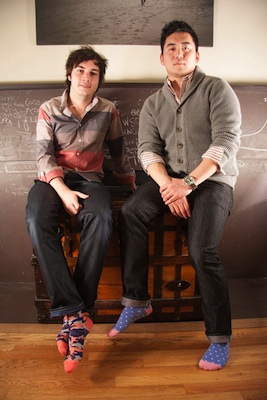
LivingSocial alumni Ricky Choi and Phil Moldavski had plans to bring fashion-forward, low-cost socks to the sock drawers. They decided to attend Dev Bootcamp in Spring 2012 instead of paying a dev shop upwards of $50K to build out their site.
Ricky attributes most of the site’s functionality to their time at DBC:
“Everything you see at nicelaundry.com today was built by things we learned at Dev Bootcamp. Everything from setting up the staging server, to the HTML and CSS on the front end, to custom things that make the site operate in the way that it does. We were able to launch our site for free, we could set up things like our own email server without jumping through hoops, and that’s a boom to the business.”
Their successful e-commerce business, Nice Laundry, just moved to NYC, and Ricky continues to stress the importance of handling their development work in-house.
Thanks to lessons learned at a programming bootcamp, Ricky and Phil are making over your sock drawer, but they’re also building out back-end infrastructure, front-end design, and payment platforms for their site.
Case Study: College Prep Program for Middle School Students
And then there’s Rachel Warbelow, the visionary Teach For America teacher in Las Vegas who went to Dev Bootcamp in the Summer of 2013 to learn to code.

Rachel, along with co-founder Ben Salkowe, created the SWOT program, a unique college-prep program for middle school students, but they were tracking students’ progress manually using “clipboards and spreadsheets and a giant mass of disconnected documents.” A self-described “data freak,” Rachel applied to Dev Bootcamp to learn the skills necessary to build an automated tracking system.
In her interview, she was clear about her goals to launch SWOTbot, not search for an entry-level developer job, and luckily Dev Bootcamp could see the potential. When it was time for group projects, Rachel pitched the SWOTbot idea, it got top-voted, and her team got to work, building the web app in about 8 days.
Rachel’s story is a testament to technical founders, because she drove both the idea for SWOTbot and the technical development. Rachel was able to incorporate unique features into her product. She describes how her team translated the manual process into a web app:
“I opened all of the documents I had from the past couple years — the Excel spreadsheets, the checklists, and the Google Docs. Then, we got on the phone with students and their families. Then we thought about what would be easiest for a teacher. One of the biggest problems with putting technology in a classroom is that a lot of the time it makes my job harder. The technology is slow, it has to connect to the internet, it takes a million buttons to get to the program, etc. So that was our big focus: what will make teachers love to use this? At first, we were thinking to have the app on a computer, but a teacher can’t be moving around the classroom that way. So we optimized it for an iPad. That way, teachers can walk around their classrooms or be working with small groups of students and still be entering behaviors and other student data.”
Once Rachel launched the app in her middle school, she actually started teaching her students to code and launched an Indiegogo campaign to buy them computers.
Rachel is now on the other side of the bootcamp industry, serving as a supporting instructor and Pedagogy Lead for Jeff Casimir’s newest 7-month school, Turing, in Denver. She has been asked to develop and improve the school’s educational pedagogy this summer, including setting learning goals, achievement standards, and evaluation rubrics. We can’t wait to see what she contributes to the bootcamp world.
Dev Bootcamp, along with other coding bootcamps like Makersquare, Launch Academy, and Hack Reactor, are preparing a generation of talented developers not only to get jobs, but also to bring their own ideas to reality. Evaluating a school’s placement rates is important, but the products launched by graduates can also be an impressive indicator of the school’s success: Rachel, Ricky & Phil are proof of that!
About the Author
Liz Eggleston is a LivingSocial alum and co-founder of Course Report, the online resource for potential students considering a coding bootcamp. Catch up with Liz on Twitter and on the Course Report Blog.


