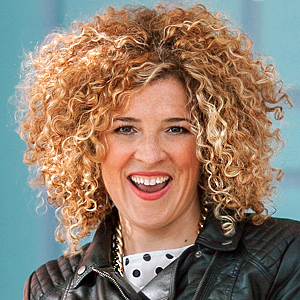
Sarah is currently a design and user experience instructor for Femgineer’s Lean Product Development course.
Read our interview with this magnetic user experience designer!
Tell me something interesting about yourself.
I’m half Canadian! I moved to the United States when I was 18. I’m so glad I grew up in Canada. Even though it’s so close to the United States, it’s still a very different place. When I travel, I normally travel on my Canadian passport, people are so much nicer to me! Sorry Americans!!
You probably need some well deserved downtime after wearing so many hats as a designer, consultant, and writer. What do you do after work or to relax?
I run and train for half marathons. I like running because there’s always room for improvement. And since I use NikePlus I can track everything and have that data to help me run faster and more efficiently.
I want to understand how and why you ended up being an User Experience Designer. What led you to it? What were you doing before?
I originally planned to study neuroscience at a university in Canada. I took some courses in high school that made me become fascinated with the brain. However, after high school I decided to go to Texas where I had some friends to do my first year of college down there. During that time, I had a part time job where I was given a copy of Dreamweaver 2 and Photoshop 3 and told to teach myself to make a website. Through that experience I realized that design was something that really complemented my half scientific and half creative brain.
Over the next few years, I learned more about graphic design, web design, and learned how to do front end coding. I didn’t even know a field called user experience existed back then. But over time, I realized that someone must look at the bigger picture to make sure that what is designed and what is coded actually makes sense.
I also think user experience is a great fit for me because it allows me to also consider the business goals. I love learning and as a user experience designer I’m constantly learning about a new industry with each client.
Did you have key mentors or people who deeply influenced you?
I honestly didn’t really have any mentors. When I decided to pursue this as a career, I do remember doing a lot of reading and research. I would spend hours at the bookstore reading business and design books. I subscribed to tons of design magazines. And I would spend hours on the Internet reading blogs and discovering new design communities that I could learn from. I was definitely self taught.
I had a few managers along the way who were more technical. As a result of that, I developed what I call “technical literacy” that allows me to collaborate with developers and not be intimidated by the world of technology. I’m genuinely interested in understanding the technical components because I know that will help me design a better experience.
Did you have any life-changing experience that put you on the path that led you to be doing what you were doing today?ƒ
My career in user experience design has been fairly natural. Every job and experience (thankfully) has built upon each other nicely and helped give me the skills I needed to keep progressing in my field. There wasn’t any big mid-life career switch because this has really been the only field I’ve worked in!
I suppose the only big change I’ve had is that in the fall of 2012 I left the startup I was at so that I could pursue working for myself. I always wanted to work for myself and just hadn’t actually made the leap. After working at startups in NYC for nearly 6 years I was just ready for a change. As well, I wanted to explore other industries. Working at one company can easily lead to tunnel vision and I wanted to see what else was out there. Part of being a user experience designer means that you’re an explorer and working for myself meant that I could do more exploring. So far, it’s been quite an adventure!
What were the skill you had to acquire? Where and how did you learn those skills?
As I said earlier I was very much self taught. I used every resource available to me to learn. Later on in my career, Twitter became an invaluable resource for me because I ended up “following” a lot of people in my field. This meant that my Twitter feed was just full of great articles, tips, and resources that I never would have found on my own.
I suppose one great tip I have is to find a community to be a part of. This doesn’t have to be an in person community (although that’s nice). But if you’re genuinely interested in learning about something, then hang out where those people hang out. In my case it was Twitter as well as some design communities that probably don’t even exist today … wow, I feel old!
In terms of skills, I can’t emphasize this enough. Don’t just learn a tool or piece of software. Learn how to think. You can teach anyone how to learn a tool. But it’s much harder to learn how to think. The best two tips I can give for learning how to think are really simple. First, always as why. I asked this all the time to everyone I worked with earlier in my career. It helped me see behind decisions and solutions and get inside their heads. Second, you should become a writer. Writing forces you to think. So if you want to learn how to think, start a blog where you write about user experience. Critique apps or websites you use. Offer solutions to problems that annoy you. Share experiences you have that you wish could have been better. There’s lots to write about, you just have to decide to actually do it.
How long have you been a User Experience Designer? Can you give me a brief overview of what it is you do in your work?
I’ve been working at the overlap of business, technology, and design for the past 13 years. I’d say my focus on user experience started about 10 years ago. I work with two types of people or companies. They either have an idea for a product or service and I help them define and launch that, or they have a product or service already in market and I help optimize that experience.
Regardless of what stage they are at though, I normally follow a set of key phases in my process including user research, identifying features and prioritizing them, working through key user flows, and wireframing the main screens of the experience. Depending on the client’s needs and budget, sometimes I also do the interface design. I started out in web design and really love that design component creating a great user experience.
What would you say motivates you most to do what you do? What are the goals you most want to accomplish in your work?
What motivates me most is solving problems. Ever since I was a little girl, I’ve been a problem solver. Once my family was going on a road trip and my mom bought some puzzle thinking it would keep me occupied for hours. Unfortunately for her, I solved the puzzle the day before we actually left on the road trip!
In the future, I want to work beyond the screen. I want to design experiences that are not exclusively on a laptop, tablet, or mobile device. I’d love to be challenged to design a better experience at the emergency room or at airport security. Experiences like these can be enhanced by technology but they will never be 100% screen based. I want to explore experiences that combine both physical and digital.
What profession other than your own would you like to attempt?
Someday I would love to be a ski instructor, maybe in my retirement?! I learned to ski in Canada when I was 3 and I just love being up in the mountains. My family nicknamed me the speed demon, so maybe I will also join a recreational racing club too!
Best User Experience tip?
Go with your gut, but sleep on it first. I often think “there’s no way I’ve nailed this on the first try”. So, then I spend time trying to figure out alternatives. But I’d say 8 times out of 10, I always end up going back to my initial solution. I always force myself to sleep on a solution and decide in the morning though. I think this really simply comes from experience. Also, I think this comes from the giant mental catalogue of ideas I collect from being very observant when I’m use products or services in my everyday life.
Favorite part about teaching the course?
I love to see people learn! When I was a kid I wanted to be a teacher and in high school my first job was teaching piano lessons. So I’m really excited that I’ve been able to incorporate teaching into what I do. Also, many students come with their own entrepreneurial ideas and it’s always fascinating to hear about what they’re working and where they ideas came from.
We have both startup founders and students from larger companies who attend our Lean Product Development course, what are some takeaways students will get from attending your classes?
Regardless of whether you are part of a large corporation or a startup, when a group of people come together to develop a product, it’s likely that your project encounters a common set of symptoms.
I start by asking students can you remember a time when:
- You spent hours debating which features to include?
- The thought passed through your head, “is this team really working on the same project?”
- A voice inside your head said “this is much more complicated than it needs to be”
- You felt like your team was playing a giant game of telephone
It’s been my experience that problems like this are exactly what cause a team to be over budget and beyond their timeline.
My goal is to help you avoid these problems. I will show you how specific methods and deliverables in the user experience process can help ensure your entire team is aligned on important details such as the ideal customer’s story and needs, key features and user flows, and the critical screens in the product or service.
Thank you Sarah, it’s been a pleasure!
Follow Sarah and learn more about her work. Are you interested in learning from Sarah how to design a stellar user experience for your product using lean techniques? Then apply to our upcoming iteration of Femgineer’s Lean Product Development course today!


