

While I was at Grace Hopper last week, there were a couple sessions that served as a good reminder about the importance of dealing with intersectionality in tech and supporting millennials. Tech millennials are growing in number – here is how we can support and lead them.

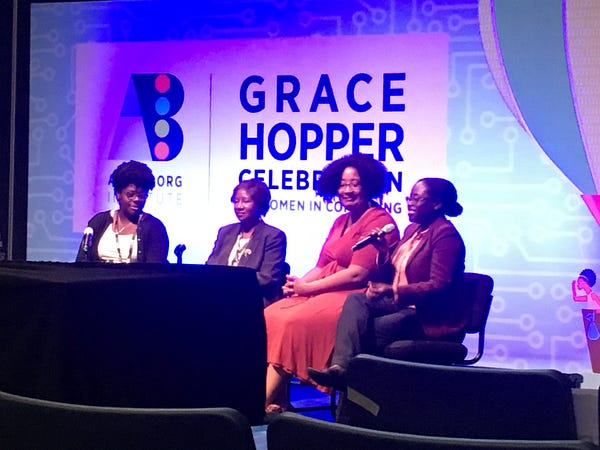
The first was a panel moderated by Dr. Jamika Burge called Owning Our Voices: Celebrating Black Women in Computing. The panelists were: Dr. Mave Houston, Founder and Head of USERLabs at Capital One; Dr. Quincy Brown, Assistant Professor at Bowie State University; Dr. Sandra K. Johnson, Founder and CEO of SKJ Visioneering, LLC; and Dr. Gloria Washington, Assistant Professor at Howard University.
There were two points that came out of this panel that I’d encourage you to consider, regardless of your particular views on intersectionality.
The first was an answer to a question I asked the panel:
“I meet a lot of young millennials who are either still in college or are recent graduates. Some them don’t want to talk about intersectionality. They don’t want to draw attention to their differences. They believe we are in a meritocracy and don’t think they’ve experienced any injustice in their lives or careers. How should someone who is older respond?”
The panel’s response was great:
“If you’re not ready to talk about it — we’ll be here waiting for you.”
They went on to say that they understand they are entering an era where their own daughters won’t face situations they faced, which is a good thing. After all, it shows progress, and that’s what we all want at the end of the day.
Thus the second point is to not force our opinions based on our experiences on the next generation. But instead, wait for them to call on us for support if they do feel they’ve faced a trying situation. All we can do is show our willingness to support them.
For those of you that want to learn more, I’d encourage you to watch this video, which highlights the stories of Black women in computing.

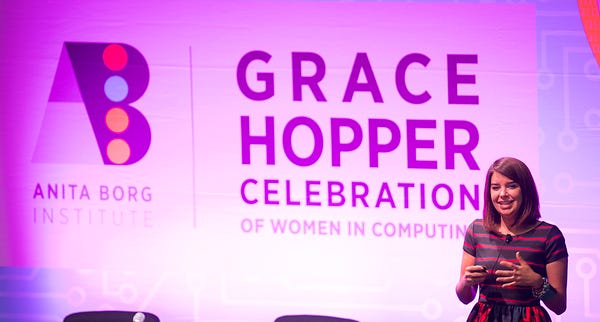
The second talk I attended was given by Emma Sagan who is a Principal, Product Manager at Capital One Labs. Emma’s talk was titled: Being Young Isn’t an Excuse: Entry-Level Syndrome.
The talk was geared towards those getting ready to graduate or recent graduates. However, I thought it was a great talk for those who will be managing tech millennials because let’s face it, millennials are operating in a different era. If we want to lead them effectively, then we need to cater to their needs, rather than trying to fit them into an outdated model that no one is happy with.
Emma started off by highlighting the importance of understanding the type of employee you have based on the following four personas: The Eager Beaver, Inventor, Risk-Taker, and Strategist. You can probably infer the definition of each of these. Aside from understanding each, it’s important to also know how to manage them.
For example, the Eager Beaver’s enthusiasm shouldn’t be curtailed. Instead, it needs to be directed, so that they stay focused and avoid taking on too much.
While the Inventor deserves praise, but should also be taught to share their ideas with others.
The Risk-Taker should be encouraged to take risks and make mistakes, so long as they don’t bring down the company.
The Strategist is someone who aspires to lead, and should be given opportunities early on, rather than having to wait endlessly.
Emma also mentioned the importance of taking the time to understand how survivorship bias affects employees, and coach young millennials, because too often they’ll look at someone else’s outward success and compare it to their inward failures.
Managers should also be aware of the tall poppy syndrome: when people of genuine merit are resented or criticized because of talent. This happens most often within peer groups, but you’ll also witness it happen when someone wants to pursue an idea or project, even though it might not be aligned with their job function. I often hear this from young engineers who say their bosses or managers don’t like them taking on projects that aren’t directly related to building product.
Emma’s final quote captures it all:
“When you’re young people want to teach you. Once you’re older, they’ll expect you to have the answer.”
Whether you’re leading or managing a millennial think about how your guidance will impact their lives and careers.
Thank you Capital One for sponsoring this post! This is a paid endorsement. All opinions are my own and were not directed by Capital One. To learn more about Capital One and career opportunities there, visit Capital One Careers.


