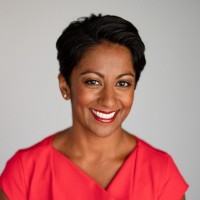
A Slow and Steady Approach to Startup Building

…in Silicon Valley?  Bah hum bug!  We have to go fast!  We need to raise capital, build product, acquire thousands of users daily, analyze metrics, recruit… go go go!  What if we paused, just for a second, to take a breathe.  Would our startup still be around?

I know what you’re thinking, “Come on Poornima cut all the yogi crap we need to get back to pitching and product before another 19 year-old moves to Silicon Valley and competes with us!”

OK.  I get it.  For the rest…

Do you remember why you moved here?

I do.  300+ days of sunshine and tech!  I grew up in Texas and I do Bikram “hot” yoga, so I love the warmth and sunshine.  Once I graduated from engineering school I wanted to be in the tech capital of the world, Silicon Valley.  When I first moved here I never thought I’d actually work for a startup let alone be running one, but here I am almost 8 years later.  This will continue to be my home base because of the first two reasons, but its possible that I may move away for awhile or run my startup from somewhere else in the world.

I know there are a lot of founders who aspire to move here, but can’t for a number of reasons.  That’s OK.  The good news is you can build your startup wherever you are, and surprisingly people all over the world are!  And last time I checked Silicon Valley wasn’t going anywhere, companies keep getting acquired, and IPOs keep happening.  We’re founders not microprocessors Moore’s law doesn’t apply to us :)

Company Age Is Just a Number

Raise your hand if your startup has been around for more than 2 years and hasn’t exited.  (I’m reaching for the stars!)

I’m not trying to make anyone feel bad and I apologize if that’s how you feel after reading this post.  I think its great that there are founders out there who can come up with an idea, raise capital from VCs, assemble a team, and find rock star developers.  I’ve even enjoyed working for one of these individuals, and I highly recommend it for those who aren’t ready to start their own startup but want to learn lot quickly.

What I’m trying to do is offer some perspective for the founders out there who maybe quietly flogging themselves daily because they haven’t raised a VC round of funding, acquired a million+ users, or exited.

Do you remember why you started your company?

I do.  I didn’t want to be a founding engineer again, I didn’t want to work for a large company, and I didn’t want to spend another $150k on an education (b-school).  I wanted freedom.  The freedom to jump out of bed everyday excited to be doing what I love: pursuing an idea, leading a team who believes in my vision, and building a solution that doesn’t exist but people needed.

Do we need to go fast?

Taking other’s money requires trading values.  You owe someone a return or a quality product, and you owe it to them within a certain time frame.

The reason many of us go fast is because we’ve taken money or we’re running out of it.  Yes I realize having a small exit has given me the luxury of having some money in the bank and time to grow slowly, but its finite and will run out.  So yes its possible to go slowly, but continue looking for alternatives to funding: keep your day job to pay the bills, monetize your users, etc. Isn’t the point of being a founder to be resourceful and bring your vision to reality?

Why do we go fast?

We’re afraid of competition or having the wherewithal to go at a speed that lets us build and deliver value slowly.  Hunger is a good motivator, fear isn’t.  Fear stops us from thinking creatively, and after awhile causes us to burn out.  Fear burnout don’t fear competition.  Competition breeds the hunger that keeps us pushing ourselves daily.  Competition is good, I compete in yoga :)

You can go slowly and still push yourself.  It just requires thinking differently and taking a different approach, which may mean bootstrapping, building out more more product, or testing it against a different user group.

Avoid Burnout by Measuring Success Through Happiness

I know many founders out there who go fast and burnout, which many times is the reason for an exit.  The key to being able to innovate and solve problems creatively is having time to oneself to think.

I’ve been measuring success by the following metrics:

  • How happy my team is to build and work with me.
  • How happy our users are to adopt and pay for our products and services.
  • How happy I am knowing that while there maybe problems and challenges I have the ability to find the resources I need to overcome them.

I’m still a capitalist (a conscious one), I still want to make money, and I still want to build a BIG business.  The only difference is that myself and my team are doing it slowly and steadily…

Startup Scene in Europe

scanbucks-startup-europeI’ve spent the past month working from Europe, spending most of my time in Paris and some in London.  I know there are more cities such as ones in Germany and Israel that also have startup scenes will visit them soon!  I thought I’d share my learnings from Paris and London, what founders care about, and even give a little commentary on what it would take for these scenes to grow.

Accessibility

There’s a common misconception that’s been perpetuated that there is a lack of innovation outside of the US.  Entrepreneurs everywhere are passionate about what they are doing, even in Europe.  For many the choice of location comes down to accessibility.  Its not like an entrepreneur tell himself, “No I don’t want access to capital, developers, and the support structure of Silicon Valley.”  Many startup founders would love to move to Silicon Valley and part of the high tech scene, but just don’t have the means to make it happen in part due to funds or immigration issues.  The later being the biggest hurdle because many do take the time to visit and work in Silicon Valley.

Hence many have to change their goals and build a strong base first in their native country, then grow in the European market, and hope to eventually create a global company.

hellofresh-europe-startupCopy Cats is the Pot Calling the Kettle Black

Startups in the US copy each other…  Groupon clones anyone?!  So I don’t think its fair to say European companies shouldn’t be copying US companies.  Yes there is the issue of IP and trademarking.  But leaving that aside, European consumers aren’t going to wait for US companies to think that the European market is large enough or worth selling to.  People everywhere want products!  As long as US companies have a provincial view that the European market is too small and not worth selling to, or that it takes a lot of effort to change a product to fit a culture and isn’t worth it because of the former point, then there will be a market opportunity for startups in Europe to create similar products.

shopandtip-europe-startupMetric System vs. US System

Everyone cares about customer acquisition, conversion rates, customer lifetime value, and of course creating a profitable and thriving company.  Happy to hear that Eric Ries plans to make a cameo in Europe because founders here love the lean startup movement, and are certainly applying the lessons to their startups.

Funding & Founders come in many flavors

There are serial entrepreneurs in the US and there are certainly many here as well.  The Dashlane and Civiliz founders are prime examples.  Due to their past success they have access to capital and have been able to raise a significant amount of money for their startups.  However, the major disadvantage that first time founders in Europe have when it comes to fundraising is access to an Angel investor market (I have been spreading the word about Angel.co).  Some are fortunate to come across Angels through connections or participating in a local incubator, but the rest still have to rely on bootstrapping their startups.

While there are many startup founders who bootstrap in the US, customer acquisition and traction are what drive the majority of startups who are successful at fundraising in the US.  Monetization is an afterthought for most, please don’t argue I’ve noticed this trend in slide decks and pitches since 2005.

The priority of monetization is the major difference for early stage companies in Europe vs the US.  In a large part because it is a criteria for most European investors to even invest in a startup.

This has some side effects of course like not being able to grow as quickly and thereby being seen as not having a “large vision”.

Limitations

There are of course the usual suspects when it comes to the rate of innovation such as the government laws around hiring practice and tax structures, oh and the whole currency and banking crisis, but its not stopping bright and hungry founders from starting companies!

What does limit innovation here is access to capital, talent, and the negative sentiment of failure.  However, these sentiments are common in many US cities outside of Silicon Valley.

There are also some trends in product development such as Agile and User Experience Design that are nascent in Europe, but I think its just a matter of time.

heycrowd-europe-startupWhole new meaning to LBS…

As a founder I’m pretty optimistic about the future for European startups and their founders.  I think there presence will add a healthy dose of competition to many Silicon Valley startups.  The scene and the support structure around it are also growing as evidenced by the presence of bloggers, incubators, developer communities, and conferences here.  While there are hurdles those who are the hungriest will figure out ways to overcome them.  I think the added competition will also cause founders everywhere to start thinking about how to create products and companies that can be adapted to fit a global market, at least for those who want to avoid the innovator’s dilemma :)

Whats Does a User Experience Specialist Do?

Despite being a code loving femgineer I secretly harbor a prediliction for design and focus on user experience, which is why I read books like John Maeda’s The Laws of Simplicity, Donald Norman’s Design of Everyday Things, design infographics (What its like to be a Yoga Instructor  in the US?, What does it cost to pursue your passion?, Studio Stats), and am obsessed with prototyping.   I think its just my innate desire to be creative.  For those who are like me or want to learn more about the user experience I thought I’d share this infographic I recently came across done by Onward Search.

ux-user-experience-design

Trauma Doesn’t Need to Lead to Drama

I got hit by a van. It happened two days ago as I was walking across a very short crosswalk on Kingsway road in London moments after I left a cafe after having bought a cup of tea. I actually didn’t even realize what had happened to me until I had been knocked over, the tea went flying out of my hand, I landed on the ground, and the left front tire of the van was on my left leg. That’s a lot of lefts for someone who should have been looking over her right shoulder.

The tire was on top of my left leg for what felt like two minutes. During that time I kept repeating: “Please, please, get off my leg, please.” Around me a crowd had formed. The driver was in shock, and someone had rushed over to instruct him on what to do. A lady was by my side. As the van moved back someone slowly dragged my body to the curb. Once the tire was off my leg, I had the thought, “Is this really happening to me?”

I didn’t cry, I didn’t say anything, I just sat there rubbed my leg and breathed. Then the questioning began.

“Are you alright?” “Who are you?” “Is there someone we can call?”

I just kept breathing and responded, “I’m visiting. My friend Sophie works in the building nearby.” I pulled out my cell phone and handed someone her phone number.

I could hear a man behind me start to yell at the van’s driver. “Why didn’t you watch where you’re going!”

The driver was completely freaked out. “I didn’t see her.” He had the right of way, I had crossed when I shouldn’t have. I felt terrible for him. I said, “Its not his fault.”

The lady who had been by my side remarked, “You’re awfully calm, I’d be hysterical.” Yes I was calm, but I didn’t see any reason to get upset, mostly because I felt stupid for crossing when I shouldn’t have, for causing all this commotion, and for freaking everyone out around me and interrupting their otherwise ordinary day.

Within a couple minutes the ambulance came by followed by the police. The paramedics asked if I wanted gas or any pain killers, I said no. My leg was throbbing but it wasn’t unbearable, and I was just breathing, calmly.

Someone said something that made me laugh, which turned the worried look on Sophie’s face into a smile as she came to my rescue.

The paramedics took me into the ambulance and checked my leg out. It looked pretty beat up, but no blood, not even a scratch. I had been very lucky. They proceeded to take Sophie and me to the hospital. On the way I had Sophie email my team, and the people I was supposed to meet with that afternoon to let them know I wouldn’t be able to meet with them.

Once we got to the hospital the long wait began. I wanted more ice for my leg, but apparently the ice machine was broken… Ok no use in getting upset I thought, I was just happy to be alive. I was so thrilled that I was the only one smiling and laughing in the emergency room. Sophie told me to stop or they would never take a look at me. I tried my best to look upset and angry, but I wasn’t. I wasn’t even in pain. I was just thankful. Thankful that complete strangers had come to my rescue, that I could wiggle my toes, and that I was alive and smiling.

Sophie bought me a small bar of this amazing chili chocolate to cheer me up. That pretty much got me through the 4 hour long wait in the emergency room, after which they x-rayed my leg. The prognosis was good. I just had soft tissue damage, lots of bruising, but nothing was broken. I could leave. While I couldn’t walk without crutches that evening, the pain had died down.

When I got home my closest friends and family had learned about what had happened to me. They were all extremely worried, and I spent the evening reassuring everyone that I was OK.

The next day I was up, and today while I have a bit of a limp I’m walking, apparently a little too fast, because Sophie advised that I slow down as we were walking to lunch :)

There are a few things I’ve learned from this experience that I wanted to share. The first is that I’m happy that despite a temporary moment of stupidity I still have the ability to walk. The second is that I’m very grateful for those who were at my side, and for all those who loved and showed concern for my well-being, my close friends, family, and employees. The third is that despite a traumatic incident I’m glad I was able to stay calm and return to my normal life. I actually wonder if my calmness is what made the whole incident less tragic, although most of my friends seem to think that all the yoga I do has just made my leg super strong :D

Stop the Protectionist States of America

Dear Femgineer Readers,

For those of you who want to learn more about what Protect IP and SOPA are, here is a video on the topic:

PROTECT IP / SOPA Breaks The Internet from Fight for the Future on Vimeo.

If you are interested in stopping the the government from continuing to take away more and more of our liberties you can also sign the petition at the end of the video.

Sincerely,

Poornima Vijayashanker

Coder with Conviction

Blurred vision is better than blindness

Everyone by this point knows that one of the primary tasks of a startup founder is to set the vision for the company.  Yes there are additional tasks such as keeping employees motivated, recruiting new talent, and good old fundraising.  But for now lets focus purely on setting the vision.  Initially, this is one of the hardest tasks because there are three things that determine the vision:

  • What will the product be?
  • Who will the product be for?
  • How will the product and company be built?

Know what you want.

The reason its so hard to set a vision is because as a startup founder you have to know what you want.  When I started BizeeBee I knew I wanted to build a tool for small businesses.  In fact all I did in the first 3 months of starting BizeeBee was walk around and talk about how I was going to build a tool for small businesses.  Had I built any of the product yet?  No.  Did I know who I was building it for? Sorta. Did I know how I was going to build the product and company?  Yes!

1/3 isn’t too bad.

So I knew how to build products and I knew how to recruit.  That was a decent start, and that’s where I began.  People who are about to risk something: a day job, their reputation, or other jobs offers, want to at least know that their leader has a decent idea of where they are going.  After all those who join startups know that there won’t always be a smooth ride, some actually thrive on a roller coaster, but everyone wants to know that there is a destination and their leader has charted a course.  Problems begin when founders don’t have a course, are constantly changing it, or abandon the pursuit altogether, this is by the way the quickest path to demoralizing employees.

The other reason its so important for employees to know where they are going is because they’re participating in helping you solve problems.  Letting them know where the company is headed gives them a heads up to start thinking of solutions.  I talked about how we were going to build a solution for small businesses, it had to be a very simple product with a consistent UI, and one that required little no setup.  Then when it came time to start building those became our guiding principles.

Part 1 of vision setting:  talk about what you’re going to build and set some principles to guide your decisions.

Got market?

I’m not going to get into the whole spiel about finding product/market fit because there are plenty of blogs out there that talk about it.  Figuring out what the product will be takes time.

But the one often overlooked point is how will the product shape the business.  The reason this is overlooked is because too many startups take a brute force approach to product/market fit trying a bunch of different product ideas, instead of trying to understand the market first.  This is also why coming up with a business model or monetization scheme is difficult for most.  Placing too much emphasis on the product and not enough on the market is what is driving many of the feature driven companies to exist.  Its fine to be a point tool if that is what you want, but know it, own it and focus.  Don’t spend time touting how you are saving the whales if that’s not part of your product benefit.

As a startup founder you  need to understand the landscape of the market you are in that means knowing the competitors, understanding the problems of potential customers across demographics, and finally figuring out how to differentiate yourself.  Its this differentiation that will help with product/market fit, creating a product roadmap, and then being able to market your product to customers.

Part 2 of vision setting: figuring out your market and what problem in that market you’re aiming to solve.

If you build it, they may come…

Every startup founder, especially those of us who are technical fall in love with the product we’ve built, and think its the greatest thing since sliced bread.  More than likely its not.  So first give yourself a pat of the back for knowing how to build, then go out and look for who is going to value it.  This takes sometime and can alter your vision.  For example, you might have originally built a product for say a yoga studio, only to discover that it only works for small independent yoga studios or private instructors :)  Well thats ok, at least you know who you’re initial customer base is.  You’re vision has changed slightly but now you can go out and look for more of those customers!

These kind of discoveries are merely detours, not a change in direction.

Part 3 of vision setting: if you’re customers don’t come, go out and find them, and tell them about your product!

No one calls a founder a visionary until they’ve successfully executed on bringing their vision to life.  So even if your vision is less than perfect its important to at least have one that consists of knowing what you want to create and how you want to create it.

If you want a free lunch, make it yourself!

In second grade I used to eat with all my friends.  We had a ritual of showing off what we had and trading items.  All through elementary school I thought my dad was the smartest guy in the world, and just knew anything and everything.  My mom was the one who usually packed my lunch, but there was one day my dad packed it, so I didn’t think anything of it because I figured he knew what he was doing…  Well on that fateful day I opened it up to discover that he had packed me garlic bread, and that was pretty much it… I was mortified!  I quickly became the laughing stock of the second grade, which by the way isn’t hard to become and fortunately kids forget what happens in second grade by the next week.  So I wasn’t particularly upset with my dad.  I knew it was because he was in a rush, and my brother had just been born.  There wasn’t much time to put thought into packing me sandwich or something that would give me a little more cred at recess.  Being the independent-minded 7 year old, I took matters into my own hands.

I got more organized.  I would plan my outfits for the day ahead of time, wake up early, pack my own lunch, hop on my bike, and go to school.   On the weekends I started going shopping with my mom, and to up my cred I talked her into buying me lunchables.  I explained to her that we could just buy 4-5 packs a week, and a 6-pack of Hi-C, nothing else!  The kids all thought my parents were the coolest because they let me eat lunchables, and my parents thought I was being so independent and resourceful.  All I wanted was to take the focus off of my lunch at the table, gain some independence from my parents, and eat food that tasted good!

Culture of Constraints

In 4 days it will be the 1 year anniversary of launching BizeeBee my second startup. When I started BizeeBee I was determined to put in place engineering principles that I hadn’t been able to at previous companies.  I also wanted to avoid a lot of bad practices that I had experienced throughout my career such as splitting the responsibilities of development and testing, and product bloat.

I know most startups like to take the quick and dirty approach to product development, and then go back and refactor or rebuild their product.  I think that’s great and we’ve certainly refactored a lot of our code base too.  But I started charging customers from day 1 of launching and had to convey confidence to get them to pay.  So I emphasized quality first and foremost.

My vision for BizeeBee’s product and engineering team was to create a simple and high quality product, and to do so cost-effectively.  I communicated these constraints to my team, and we knew there would of course be trade-offs, but we all agreed to these basic principles to guide our decision making and product development process.

Invest time in talent

In any industry employees are not interchangeable.  I know there are a lot of people who like outsourcing and just want something “built”.  This is fine if you are driving a culture of results.  But I truly believe employees need to be engaged in worthwhile work to produce quality.  So I hire for raw talent, hunger, and patience above all else.  I truly believe this is the only way to attract top performers.  You can look at people’s track record, but many don’t have one, so you just have to rest on raw talent and motivation.

Having a talented team is great because it means they will invest time in learning, after all talent is just a byproduct of learning, practice, and refining a skill.

So I invested the time in letting my engineers learn Rails and the entire stack of technologies that went with it.  I also had them talk to experts in the field about engineering process.  We adopted an Agile process and pair program.

Trade-off: giving people time to learn and not spend all their time developing means that less features will be built.  I know most founders would be too impatient with this approach, but I guess that’s why its helpful that I do yoga :)

Cost Effective Quality

I didn’t have the luxury of having enough money to hire QA engineers, but then again I never liked how engineers would abdicate responsibility for their code to someone else.  Not having a QA team meant that my engineers would need to test their own code.  So for the first time ever I got what I had wanted: TDD (test driven development).

Trade-off: once again less features are built, but what is built has a high level of quality.

Simple Design & Integrating Solutions

Over the course of my engineering career I’ve read a ton of design books, because my personal mission of becoming an engineer was to build things that improve human life.  So I wanted to build products that had an emotional appeal, and people would derive joy and want to use them all the time.  Life is already full of stress, the last thing I want to do is cause someone to have a bad day because I built a shitty product.

We don’t build everything, especially if we can find a good off the shelf solution.  If we don’t find one we’ll either build it ourselves, and if its not cost-effective then we’ll wait until we can afford to build it.  This of course means we’re spending a lot of time doing research, talking to vendors, understanding terms of service, and understanding the long terms implications of the partnership.

Trade-offs: this can stall product development but its important to know who you’re getting hitched to :)

I can’t speak for other startup founders but as one who wears both the business and technical hat I’ve had the freedom to create a company and engineering culture that I’ve grown to love and can be proud of.  I have to give a LOT of credit to my two developers: Alex Notov and David Grieser who pushed me into implementing a lot of processes and have made me a much better femgineer.  I also want to thank Jesse Taggert for her help with product design, and introducing us to Kevin Fitzpatrick at  Pivotal Labs.  And last but not least Lyndi Thompson our buzz bee who spreads the word about our product and team, and keeps encouraging me to write code and blog posts.

Its been a good year and I look forward to continuing to build BizeeBee in 2012!

Chocolate World Tour: Theo’s Seattle, WA

I was first introduced to Theo’s chocolate by Lyndi Thompson last year.  The company is named after the Theobroma Cacao tree.  Theo is the only organic and fair trade chocolate maker out there today. My favorite Theo bars are the dark chocolate coconut and the spicy chile. I also got a chance to sample the orange spice drinking chocolate for the first time this week, its an amazing treat on a cold and rainy day!

Theo has several lines of chocolate bars both dark and milk chocolates, and a number of confections such as truffles.  The bars also have a number of inclusions ranging from french bread to coconut curry.  I’d highly recommend touring the factory and store to try out the variety of bars and confections Theo has to offer.  The store in Seattle, WA is right next door to the factory where they manufacture all the chocolates. The factory gives tours during the week. Each tour is about 1 hour long. During the tour you can learn the entire process of how Theo makes its chocolate:

  • The company sources its beans from several countries, but since all its chocolate is fair trade it does not buy from the Ivory Coast or Ghana.
  • Unlike most large American chocolate makers such as Hershey’s, Theo’s has a smaller factory, so it purchases most of its chocolate making machinery from Europe because American machinery will not fit in the factory,.
  • The factory runs nearly 24 hours a day 6 days a week.

I highly recommend checking out both the shop and the factory tour if you’re ever in Seattle, or adding it to your own chocolate tour of the Pacific Northwest. Next stop for me Portland, OR!

Chocolate World Tour: Fran’s Seattle, WA

Aside from coding, yoga, and travel, I’m a HUGE chocoholic.  I prefer daily intakes of dark chocolate in bar form, nothing less than 70% will do, but I also make  truffles, and occasionally indulge in making dark chocolate crème brûlée.

You can find me on Saturdays at the Chocolate Garage in downtown Palo Alto, sampling bars of dark chocolate from around the world.

I’m starting a new series of visiting chocolate shops across the world and posting video tours of my visits for others to enjoy.

Today I visited Fran’s in downtown Seattle, WA near Pike’s Place.  Fran’s has been open since 1982 (coincidentally the year I was born).  Originally Fran was into making confections, and would hand out truffles to people who were standing in line waiting to buy her confections.  But then people started mainly coming for the truffles so her business shifted from confections to making mostly truffles.  My favorite is the Single Malt Whiskey Truffle.  If you’re not fortunate enough to live near Seattle you can order some of her amazing truffles online.

Enjoy! :)

P.S. Thanks to Lyndi Thompson for introducing me to Fran’s!